
The Gathering Place

When I wrote the first three episodes of “They Live Among Us,” I was toying with the concept of each episode as a stand-alone story, patterned somewhat after Rod Serling’s masterful “The Twilight Zone.” I liked the idea of strangers, walking in and out of each other’s lives, and how little we know about the man or woman who stands next to us on the train. However, as the characters began to come to life, I realized that this little idea was bigger than I originally thought; it had – and has – all of the earmarks of a fully fledged series.

I began to think about how to keep the characters independent of one another, while also weaving a tapestry of stories. I was also concerned about exterior night shoots – they are considerably more expensive to film. I realized that what I needed was a central location, a gathering place where my characters could come to meet, to work, to seek solace and comfort. Thus, I created TLAU’s gathering place – The Paradise Bar.

Contrary to its name, Paradise has seen better days. It’s a shabby, dark watering hole just off of Hollywood Boulevard. Faded photos from stars of yesteryear adorn its paneled walls. This is where Caim and Father Buer come to meet. This is where Craig meets Lillith. Beth works at the Paradise. Drawn to Hollywood by its promises of celebrity and fame, Beth is a struggling actress, and, like so many desperate young women before her, will do anything to get the job.

Presiding over the Paradise’s tarnished facade is Jimmy. Jimmy is a transplant from Ohio; his grandmother moved there from California after Jimmy’s grandfather died. She had just discovered that she was pregnant, and she moved in with her in-laws, so they could help her raise the child.

Jimmy has always been curious about his grandfather; like Jimmy, he was a writer – though not a successful one. The circumstances surrounding his death were mysterious; tawdry fodder for the tabloids. Jimmy yearns to uncover the truth behind this mystery, and to discover just who his grandfather really was. The only thing he has to go on is the knowledge that his grandfather was a screenwriter. He also has his grandfather’s name: Joe. Joe Gillis.

The Inhumanity of Humans

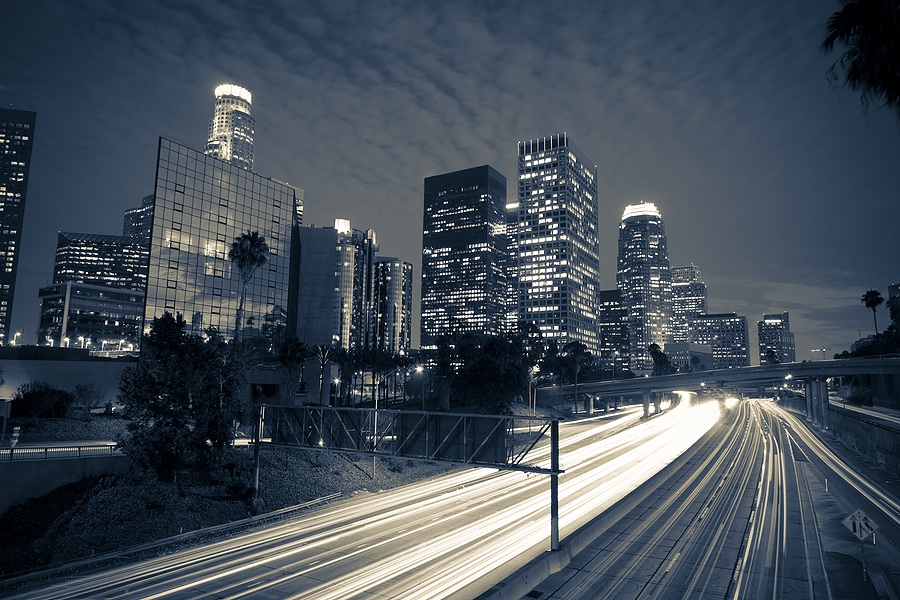
The theme that drives the look, the sound, the story of They Live Among Us is the dichotomy of life in Los Angeles. Feeling alone in a city of millions. The glitz of Hollywood, against the dirty machinations of the Hollywood machine. The incongruous wealth of the Westside set against the abject poverty of homelessness. How humans can be the most inhuman of beings.

I wanted to go Downtown and shoot some location stills; I wanted to find some visual imagery that expressed the rich cultural tapestry of Los Angeles, to find some good visuals for mood/tone, as well as to nail down good second unit shots and principal locations. I hopped the subway yesterday, and traveled towards Union Station. The idea was to stop at Union Station, begin at Olvera street, and head back up, one stop at a time.

Eventually, I made my way up to the Civic Center stop, which rests at the corner across from Our Lady of the Angels Cathedral.

The Cathedral is magnificent; twelve stories high, towering over 2.5 acres. Golden, brilliant, shimmering with triumph… and power. I stood in the plaza as the bells began to ring their call to mass; goose pimples broke out on my arms.

In the gift shop, I learned of the costs of this behemoth structure. $250,000,000.00.

I realized that this place was far from the reaches of the character of Fr. Buer. It was not in these gilded halls that he gave his flocks comfort, but on the streets of Skid Row.

And thus, eventually, I found myself standing in the middle of Skid Row.

Skid Row is all but forgotten in Los Angeles. Originally, it lived between 3rd and 7th streets, bordered by Main and Alvarado. However, a few years ago, developers realized the opportunity to exploit the impoverished; they snapped up building after building, at below market prices, and began the long and painful gentrification of Skid Row.

On the surface it all seemed good. Skid Row would be no more. The homeless would be helped. Celebrities joined the cause; they helped feed the masses on holidays. They took photo opps with homeless children. They threw some money at organizations… and then, they quietly went away.

Skid Row did not disappear. Skid Row was simply relocated – a few blocks east – into an even more inhospitable clime. At the incongruous intersection of Winston and Wall Street.

The first thing you notice as you walk towards Skid Row is the smell. The air reeks of vomit, of urine, and of despair. Trash does not litter the sidewalk; instead it percolates in piles along the streets.

Then, you notice the noise. There is a constant hum, a chatter, the babbling of the damned, for Skid Row is a real-life articulation of Dante’s Fifth Circle of Hell.

I have been asked if I was afraid, and I was not. These people were not dangerous. They were victims; every ounce of their being was channeled towards surviving the next minute. People, all of them, living on the streets. Young children scattered among them, eyes wide with fear. A man and a woman, engaged in a brawl, while a group encircled them, cackling and cheering. The horror of insanity. The stench of fear. The degradation of being expelled into this hell-on-earth.

I’ve always believed that poverty was the most insidious form of violence, and here, on Skid Row, this belief was reinforced.

Eventually, the day grew long, and as the shadows of dusk began to descend, we made our way back home. We still had more places to go that night, and the day had exacted an emotional price on both of us.

As I rode the subway back home, I closed my eyes, and I thought of Father Buer, of how he ministered to the supernaturals who populate Skid Row, how he gives comfort to those who have fallen, and how I was grateful that, in the world that I’ve created, Father Buer lives among us.