Saving Grace

The road to redemption is not a straight path; it is filled with twists and turns. One may encounter obstacles on the way; seemingly insurmountable barriers that must be overcome, in order to journey forward.

For Father Buer, this road is, at times, a perilous one. Like Caim, Buer is himself a fallen one; he served as Captain in Caim’s army, a seasoned warrior and elder advisor, whose devotion to his General – and a certain amount of hubris – led to his downfall.

Cast out of paradise, Buer, like the others, was forced to exist as an immortal amidst the sea of humanity that surrounded him. For many, this existence leads to darkness – and to despair. However, Buer found a way. He developed an idea, a belief, that the fallen ones could transform themselves through redemption, that they could all achieve a state of grace. For Buer, this meant to devote his existence to the Church; to give comfort and aid to those in need of it most – the indigent, the mad, the angels-turned-demons that live among us.

I’m not certain how far back Buer’s occupational choice extends, although I’ve seen a collection of religious icons at the Getty, and upon examining a 14th century panel, was struck by the face of one of the monks in the relief… how similar in shape and in tone to Buer’s. A certain sense of suffering within his eyes. He stands apart from his brethren, he seems lost in thought. Yes. I believe this to be Buer. I think about his decision to serve God, and if there was catalyst that compelled him to do so. What was it? Has he ever loved a mortal?

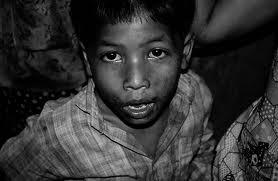
I watch him as he tends to the homeless. The social workers, the police all know him, for he spends his days weaving through the hell of Skid Row. They bring to him the untreatables; miserable wretches in filthy rags, who find no relief through traditional medical treatment, for the wretched ones are not human. The shame of being cast forth, the pain of living amongst humans, the longing for home – all of these elements have driven them mad. I wonder how this affects Father Buer. I wonder if he struggles for his own sanity. I suspect that at night, alone, these fears come to surface… but they have yet to break him.

I think about the day that Buer came to Skid Row, and found a new resident there. Weeping, frightened, babbling, he was clothed in filthy rags, his body covered with ulcers and putrescence. Buer knelt, and loosened the bindings around the other’s head… and discovered that this wretch was Caim. His general. His friend.

This discovery must have unnerved Buer, for Caim, like him, was one of the Ancient Ones. For Caim to have fallen so deep into despair was unheard of. I watch as Buer tends to Caim’s body – and to his soul. Years go by, with Caim trapped in darkness. One day, a glimmer of light – Buer sees recognition in Caim’s eyes. Another glimmer… and then, bit by bit, Caim emerges from darkness, and is finally restored to life.

And so, Buer continues his mission, to give comfort and aid to those who walk among us. He works tirelessly to restore them to grace, for he, too dreams of paradise. Redemption is the fragile thread that he clings to, for it is his last hope.

The Faces of They Live Among Us

You’ve been reading about the characters who live among us. Here are the wonderful actors who are giving them life (in no particular order – consider this a casting roundtable, L. to R.). Click on the pic to see them more up close and personal:


CAIM: Geoffrey M. Reeves

SERAFINA: Ivet Corvea

FATHER BUER: Rolf Saxon

LUCIAN: Allen Marsh

CRAIG: James Thomas Gilbert

ALEX: Erik Kowalski

BETH: Jessica Nicole Webb

SAM: Don Shirey

JIMMY: Justin Baker

PEG: Kendra Munger

TED: David Stanford

BELIALA: Marcia French

LILLITH: Nina Rausch

ROCCO: Terence J. Rotolo

The Man in the Bar

The Paradise Bar is like many watering holes. It’s a place to drown sorrows. A place to debate the meaning of life. A place to go to be amongst others – anonymously… and that’s where the man in the bar comes in.

We first see the man in the opening scene of the Paradise. There he is, in his regular seat, a bottle of Jim Beam in one hand, his fedora next to the other. He is quiet, this man in the bar; he eavesdrops on the lives of others, but offers no clue about himself. Even if he wanted to, he could not, for the man in the bar is a ghost.

His name is Sam. He never gives his last name… but I have a feeling that I know it.

Sam was a P.I. in Hollywood, in the 40s. He enjoyed the company of dames and drink. He took the usual cases – philandering spouses, runaway heiresses, the occasional murder-for-hire. Ruthless and greedy, he’d take money from anyone – and shed no tears for anyone’s pain. He cashed the checks with a smile.  He consoled lonely wives with relish. That was, until the first week of January of 1947. That was when there was a knock on his door – a knock that changed his world.

A man stood in the doorway; middle-aged, clothes threadbare, his hands trembled with palsy. He placed a picture on Sam’s desk – the picture of a young woman. A raven-haired beauty with startling blue eyes. It was his daughter – and she had disappeared. He gave Sam what little money he had, and begged him to find her. Her name was Elizabeth.

Something shifted in Sam’s universe. Perhaps it was his longing for his own daughter, estranged from him, along with her mother, by his devotion to his job – and the women that came with it.

Sam took the case, and began pounding the streets of Downtown L.A., where Elizabeth was last seen. He followed her trail to the Biltmore hotel, where she had gone to meet a man – and there, the case went cold. He found no trace of her – until the morning of January 15, when he woke to find her picture splashed across the city papers. The headlines screamed “Sex Fiend Slaying Victim Found – Detectives describe butcher scene as worst ever,” and indeed it was.

The victim’s last name was Short. Elizabeth Short, also known as the Black Dahlia.

For the next five years, Sam devoted his life to finding her killer. He took no other clients; he became obsessed with the case – wandering the crime scene over and over again, combing through cold cases and criminal records. Each night, he’d end his self-made shift at the Paradise, his ever faithful Jim Beam at his side.

His obsession took its inevitable toll, and on August 17, 1952, Sam was found dead in his office/apartment, the victim of a coronary.

Sam, ever pugnacious, refused to surrender to death. He vowed to find Elizabeth’s killer, and so, here he sits, night after night in the Paradise, going over the facts of the case, laying out rows of suspect, untangling webs of alibis, searching, sniffing for the truth.

Something in Sam’s life – and in the lives of others – is about to change. For soon, another young woman will be found dead, exactly as Elizabeth was. Same modus operandi – dismembered, mutilated, beaten. The girl could be Elizabeth’s twin sister. This discovery, this sickening crime lures Sam out of his ghostly dream-world and propels him into this life.

And so, with Sam, yet another story thread begins.

Like A Moth To The Flame

When we last saw Caim and Serafina, he had brought her to the safety of his home. Once again, the lovers have met.

I’ve been wondering a lot about this scene, as I immerse myself into these final pre-production rewrites. I know that Serafina has no memory of Caim; and yet, perhaps there is something deep within her that does. I wonder if she senses the connection between them, the eternity that they have shared together, only to be torn apart again and again. I wonder if she fears this connection, for its power is overwhelming. I fear it may drive her back to Rocco.

I crouch in the far corner of Caim’s warehouse-turned-home. My eyes are on him as he watches Serafina sleep. I wonder what he is feeling inside –  is it joy or is it anguish that washes over him as his mind turns over and over the eons of relentless punishment? Last time, losing her drove him into madness. It took years to pull him out, decades.

I believe that this reunion is bittersweet. I watch Caim as Serafina wakes. My heart breaks, for I know he yearns to touch her… and yet,  this touch has the power to undo him.

It’s a particular kind of torment, to be drawn to another, almost against one’s will, like a moth to the flame. I close my eyes and hope that this time, Caim can save her. Last time, he lost his sanity. This time, he could lose his soul.

The Sins of the Father

As I prep the script for its final pass – and begin work on Episodes 4 – 6, the character of Rocco emerges.

I’ve described Rocco as brutal and ruthless, for he is… and yet he is much more than a one-dimensional stereotype.

Rocco’s mother immigrated to the States, in search of a better life. She landed in the Bronx, and it was there that Rocco’s path was formed. She met a man – Denny was his name, and, in a matter of weeks, found herself married and pregnant. Her life was far from idyllic, for Denny had a dark and terrible secret. Ruthless fathers beget ruthless sons, and Denny was a vicious man, hell-bent on pounding out his transgressions upon his wife and child.

Like so many victims of abuse, Rocco left home at an early age. He boarded a bus and rode it straight to the West Coast. Like his father, Rocco was a dreamer. Like so many dreamers, Rocco found that his dreams were, in themselves, a trap.

He was ill-prepared for the reality of life on his own. His inner demons haunted him. He turned to drugs  for solace.

One night he met a girl. Her name was Serafina. She moved him in ways that he could not define. Perhaps she touched his soul. Their relationship was not always one of abuser and victim; but Rocco’s patterns were too deeply imprinted. The black void inside him could only filled by rage. He believed, as his father did, that love was a weakness, a disease to be cured. And so, he began to strip Serafina of what he himself did not have. He tried to rob her of her soul. He abused her. He pimped her on the streets.

And yet, there once was a very different Rocco in a very different time. A time when he knew love instead of fists. A time of hope and of promise.

We first see him, as Caim first sees him, beating Serafina into unconsciousness in a darkened alley. His rage is untethered; he is like a wild animal.

For Rocco, the sins of the father have now become the sins of the son.

Boulevard of Broken Dreams

Worlds collide at the intersection of Hollywood and Vine.

A few blocks west, and you will find yourself enveloped in the glitz of Hollywood glam. Shopping. Dining. Clubs. The Kodak, where celebrities – and their fans – turn out in Oscar-hungry droves.

A few blocks east of Vine, however, the landscape alters, for this is where this legendary roadway morphs into the Boulevard of Broken Dreams.

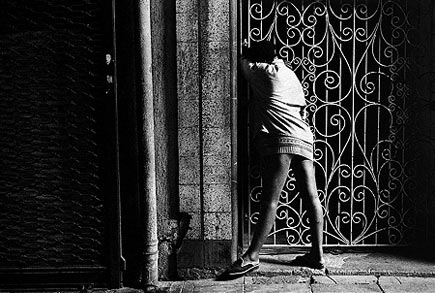
I’ve seen countless Serafinas working their territories on the streets. I grieve for them; I mourn the innocent girls that they once were. I wonder about the circumstances that drove them into such a dangerous occupation – dangerous to the mind, to the body, and to the soul. I think of the unbearable abuse that they suffered as children, and continue to suffer as adults. I think of the shame that they feel inside. I yearn to hold them, to hug them, to tell them that everything is going to be alright… even though I know this to be a lie.

For my Serafina, life has become a particular kind of hell. A runaway by the age of 13, she lived on the streets until she met Rocco, her drug-addled lover. By 15, she was fully immersed in prostitution, trading sex for money. She has suffered beatings at the hands of her clients; she has been raped more times than she can remember. She is so far removed from that little girl that she once was; trapped in self-loathing, frightened, alone.

I think that by the time that Caim finds her, she is ready to die. Death, for Serafina, would come as a relief. No more pain. No more humiliation. Just the quiet, and the dark… and Rocco’s rage is the force that propels her towards the very brink of existence.

But Serafina does not die. She wakes, the following morning, in a stranger’s home. Caim stands over her – beautiful, quiet, strong. There is sanctuary in his eyes. He treats her with kindness – perhaps he is the first man to do so. He asks her to stay; he tells her that he will take care of her. He wants nothing in return.

For most people, the decision seems obvious – but Serafina’s soul is too battered to accept such unconditional love. She struggles with her decision – to place faith in a complete stranger, or to return to the only life she knows. Now, our soul-mates are once again reunited. Their worlds will never be the same.

The Gathering Place

When I wrote the first three episodes of “They Live Among Us,” I was toying with the concept of each episode as a stand-alone story, patterned somewhat after Rod Serling’s masterful “The Twilight Zone.” I liked the idea of strangers, walking in and out of each other’s lives, and how little we know about the man or woman who stands next to us on the train. However, as the characters began to come to life, I realized that this little idea was bigger than I originally thought; it had – and has – all of the earmarks of a fully fledged series.

I began to think about how to keep the characters independent of one another, while also weaving a tapestry of stories. I was also concerned about exterior night shoots – they are considerably more expensive to film. I realized that what I needed was a central location, a gathering place where my characters could come to meet, to work, to seek solace and comfort. Thus, I created TLAU’s gathering place – The Paradise Bar.

Contrary to its name, Paradise has seen better days. It’s a shabby, dark watering hole just off of Hollywood Boulevard. Faded photos from stars of yesteryear adorn its paneled walls. This is where Caim and Father Buer come to meet. This is where Craig meets Lillith. Beth works at the Paradise. Drawn to Hollywood by its promises of celebrity and fame, Beth is a struggling actress, and, like so many desperate young women before her, will do anything to get the job.

Presiding over the Paradise’s tarnished facade is Jimmy. Jimmy is a transplant from Ohio; his grandmother moved there from California after Jimmy’s grandfather died. She had just discovered that she was pregnant, and she moved in with her in-laws, so they could help her raise the child.

Jimmy has always been curious about his grandfather; like Jimmy, he was a writer – though not a successful one. The circumstances surrounding his death were mysterious; tawdry fodder for the tabloids. Jimmy yearns to uncover the truth behind this mystery, and to discover just who his grandfather really was. The only thing he has to go on is the knowledge that his grandfather was a screenwriter. He also has his grandfather’s name: Joe. Joe Gillis.

The Saint and the Sinner

The mind is its own place, and in itself
Can make a heav’n of hell, a hell of heav’n. – John Milton, Paradise Lost

The world of demonology has been a fascinating one to explore. Fallen angels. Grace. Redemption. Madness. Despair.

When angels fall from grace, they become demons. Not only in Judeo-Christian mythos, but ancient Babylonian, Sumerian, Assyrian, Greco-Roman, Hindu and even ancient Arabic tales all embrace the concept of the fallen one as demon. It is universal.

One of the elements that led to the birth of TLAU was the desire to explore the aftermath of a fall from grace. This concept led to the creation of two characters: Father Buer – and Caim.

Father Buer  spends his days tending to the homeless in the streets of Los Angeles. In this world, however, his flock is cut, shall we say, from another cloth. Father Buer ministers to those who have fallen. He gives comfort and aid to demons.

…and this is where Caim, the fallen angel, comes in.

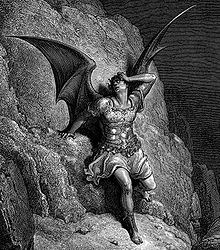
Falling from grace is both tragic and traumatic. Imagine the suffering of the fallen one, when s/he realizes what they have done – and at what cost. Life as an immortal, but on earth instead of heaven. Surrounded by mortals. Outliving them all one by one.

Surviving those you love is a particular form of torment, and for Caim, life as he now knows it is an eternity of anguish. It is enough to drive even the most stoic being mad – and that is precisely what happened to Caim. He wandered the streets, living in the hellish abyss that is Skid Row, amongst the socially untouchables, the insane. Until Father Buer found him.

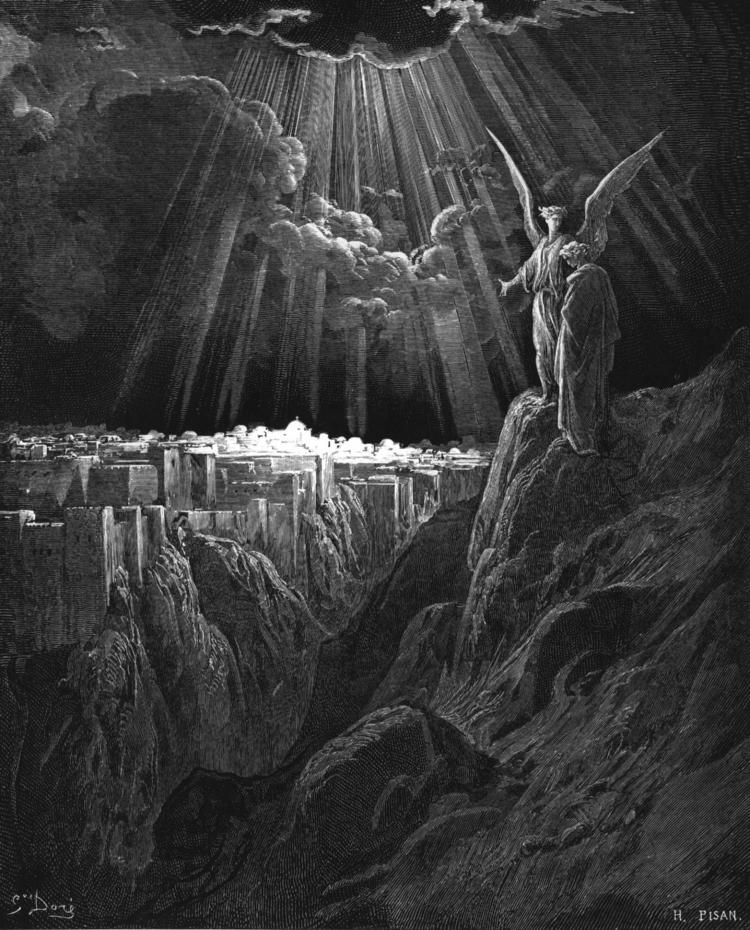
For hundreds of years, the Church has had one in their midst who gives of self to tend to the fallen ones. A priest who helps to ease their suffering, and, for a few, helps them find their way back to grace. In the City of Angels, this priest is Father Buer. His mission is to restore Caim to grace. For, as he says, “We are all of us God’s creatures. All of us. Even you.”

****

Do you like following TLAU? Support our Project!

© 2011 They Live Among Us Movie

Poverty and Creative Thinking

Poverty can be a good thing.

I have been reviewing the episodes. Placing them under various microscopes. Story. Character. Dialogue. Budget.

The last word has had my stomach turning cartwheels. Budget. Night shoots. VFX. SPFX. Can I do this – and do it well – for five grand?

In a word – no.

Granted, I will have some nifty effects… however, I realized that I needed to tone things down. Pull it back. Write it with what resources I have.

This decision has been a good one. Why? It’s forced me to write for character.

Character is what drives They Live Among Us. You’ve met Beth (now Lillith, her name, like her story, evolved), and, you’ll begin to meet the others. An angel in love with a prostitute. A youthful pop icon, who is thousands of years old. A park ranger in love with a ghost. A writer who yearns for adventure. A priest who tends to demons.

When you return to character, you return to what is essential. You cut out the fat that having money can bring. You can’t hide poor storytelling with eye-popping visuals, because you cannot afford them.

I’ve had to limit locations, because each set-up costs. By doing so, I’ve created a common ground for my characters – a shared space between them. They are strangers to one another, as are many in L.A., the countless tapestry of people weaving in and out of each others lives… connected yet apart.

These budget imposed limitations have opened up yet another portal into my gothic urban tale of the dark side of the City of Angels. I’ve been able to tap into the vast and rich history of Los Angeles. Present and past collide in startling twists and turns… and the result (I hope) is rich.

If I had ten or twenty or thirty thousand dollars to spend, I am not certain that these discoveries would have been made. For that I am most grateful

We are just over 20% of our funding for They Live Among Us. I am thrilled and eternally grateful to my beautiful backers… and am still seeking more. Consider joining our Kickstarter campaign. It will be the journey of a lifetime. I promise you.


Meet the Team – Gavin Hernandez

I’ve been working hard to create different supernatural characters than the roster of vampires, werewolves and zombies. The three form a magnificent triumvirate, that goes without saying; however, I felt that there were enough of these creatures in pop culture to generate an entire planet of the lupine and the undead. One of the three will wander its way into TLAU; however, I wanted a more unique addition to my roster.

I turned back to the readings of my youth, and thought of the creations of one particular master of the genre – H.P. Lovecraft.

It’s been years since I was terrified by the presence of Cthulu and others. My books are buried in storage. I needed some guidance.

I thought of a person that I knew who was well acquainted with the Lovecraftian tales, and contacted someone near and dear to him with a question. Gavin Hernandez is his name, and within hours, I was forwarded this reply:

“Well, a shoggoth (big tentacley thing with extra mouths and eyes and such) could probably dwell in one of the deeper tunnels, but the most likely would be a ghoul, which is a sort of canine humanoid monster that eats corpses that usually live in crypts and cemeteries. As far as ones that could pass as human…one of the Elder Gods, Nyarlathotep, the embodiment of chaos, usually takes the form of a pharaoh-like man, then the Mi-go, alien creatures with absurdly advanced tech, can masquerade with some success as rather sickly humans, but not so well in public. The best bet for that would be a Deep One-human hybrid, a la The Shadow Over Innsmouth. They are half-human half-fish humanoids, and for the first few years of their lives they appear human with a few off characteristics, only becoming full monster after several decades. They can speak fluently in whatever native tongue is nearest, and can easily pass for full human. My personal favorite would probably have to be the Mi-Go, as they aren’t hostile or evil, just very different-but they manage to still be chilling. They bear us no ill will, and have actually shown much interest in humanity. They can speak human languages, but can’t be photographed, as they are composed of rapidly vibrating particles. Also, they’re fungi. So that’s nice. Also, if she’s wondering if there are any ones that could both live in a subway and pass for human…Well, one of the characters in a story was a human painter who befriended a pack of ghouls and eventually became one. Also, cats in his stories (admittedly in a dream-land) are able to fly to and from the moon in a single bound. They’re magic.”

I laughed in wonder and delight. I knew that I had found the ultimate researcher and consultant. I asked him if I might add him to the team; he graciously agreed.

So, please welcome Gavin Hernandez. Wonderful human, compassionate soul, and master of all things Lovecraft.

Oh. Yes. Did I mention that Gavin is 15?