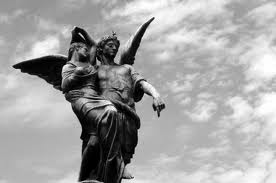
Guardian Angel

In the world of They Live Among Us, the Creator bears more resemblance to the God of Abraham, of Zeus, and other omnipotent rulers of ancient cultures, than the modern Judeo-Christian deity. The Creator is a demanding and temperamental one; the rules of Elysium are literally set in stone.

Forgiveness for and acceptance of transgressions do not exist in this paradise; to break the mores of Elysium is to be cast forth – forever.

Like the God of Abraham, the Creator, too, demands absolute obedience and submission, and in exchange for this devotion, He takes care of the world of Man. Like the God of Abraham, the Creator demands sacrifice.

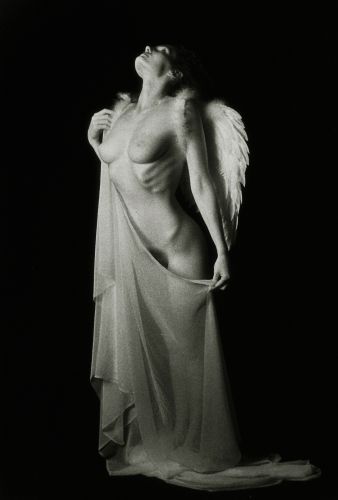
This is where the story of the Chosen One begins. Serafina, like countless women before her, was born into the House of Circes – women who devoted themselves to the Creator. Serafina’s birth was carefully contrived, for she, like the Chosen One before her, was brought into the world to offer herself in sacrifice.

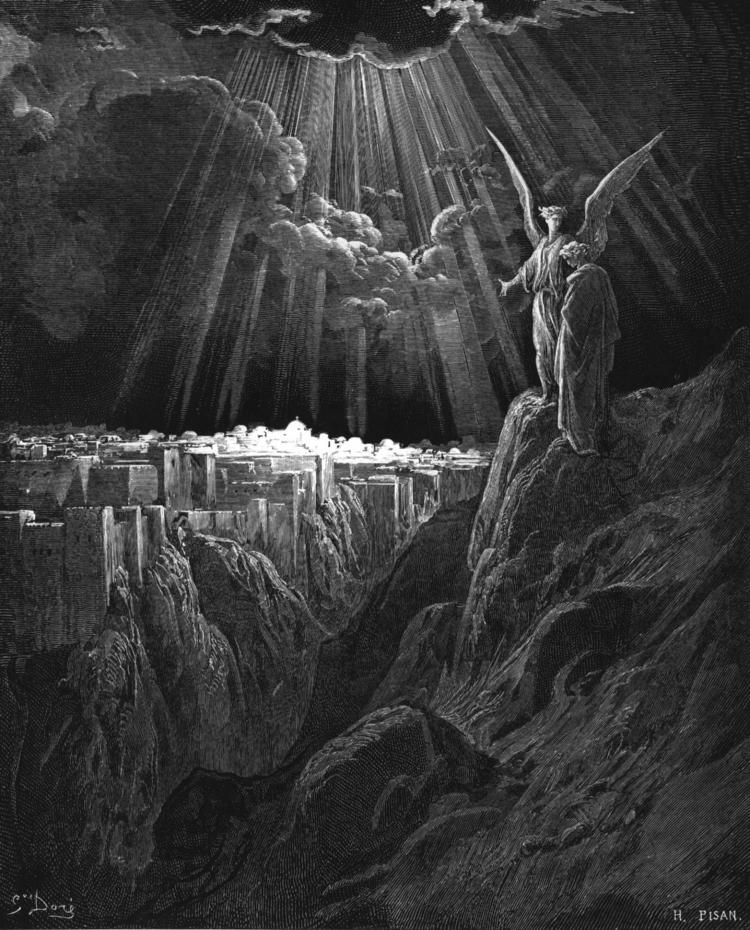
The final year in the life of the Chosen One is spent in solitude. The priestess is sent to an island, to spend her time in reflection and in prayer, so that she may prepare herself for her final duty. She is alone; offerings are brought to her by the devout. But she must not have contact with humans. It is forbidden.  She is assigned a heavenly guard – an angel, whose duty is to protect her, so that she may live – to die.

Serafina’s guardian angel was Caim.

There they are, the guardian and his charge, on the island of Aeaea. Caim is touched by Serafina’s beauty, by her calm as she prepares to perform the singular task that she was created for. She is so very brave. The world of Man is in her hands; if she does not fulfill her obligation, mankind will plunge into darkness.

Caim moves Serafina in inexplicable ways. His presence travels far beyond the mere trappings of his form; it is his soul which calls most eloquently to her, as her soul calls to him. They are blameless, the two of them. They cannot ignore the whispers they hear inside. They yearn for one another;  the opportunity to touch is fleeting. A lingering glance, the brush of a fingertip… these small moments are all they have. In their beds at night, they dream of lying together, limbs intertwined, unable to distinguish one from the other. They are star-crossed.

Every few weeks, Caim must travel to Elysium, and offer his own devotion to the Creator. Each time he leaves Aeaea, his longing for Serafina grows. Each time he enters Elysium, the seeds of discontent fester. He begins to silently question the Creator, of how He can destroy what He loves most. Caim confides in Buer, and in Lucian. The facade of obedience is cracked.

It is mere weeks before the ritual is to commence. Caim returns from Elysium. In her garden, Serafina waits…
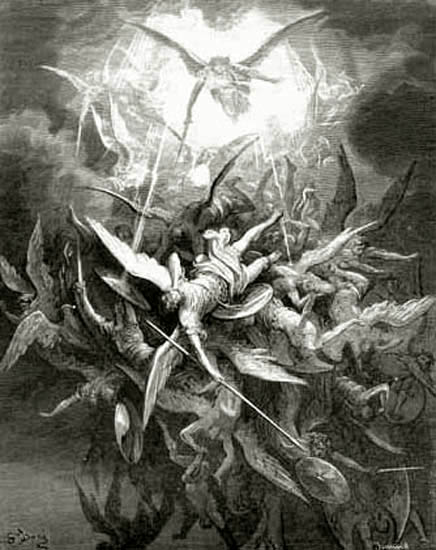
The Struggle Within

Recurrent themes echo within the world of They Live Among Us. Each character struggles with feelings of isolation, of loneliness… of being different… an outsider.

Being alone in a city of over 4 million people provides one with a certain autonomy; there is comfort in invisibility… and yet, there is also sorrow. Each of the characters yearn for something; they wish for their souls to be touched, and it is because of this yearning that they must raise their defenses and bear the shields of objectivity and separation. Emotions must be compartmentalized, for, when they are not, they erupt with the power of Vesuvius.

Good and evil are not defined in black and white in this modern gothic world. No one is completely pure; and yet all have the chance for redemption. Even Lucian longs for love, from his Creator, from his master… from Serafina. Father Buer, in the dark of the night, closes his eyes and dreams of Elysium, where once he loved another. They are very mortal, these immortals. They hope. They fear. They dream.

Each struggles with inner demons: Craig, the perpetual man-child. Rocco, the monkey of drug addiction riding with great fury upon his back. Serafina, burdened with a soul that has been denied eternal rest, Jimmy, haunted by Beth’s sudden disappearance, and Caim, the wounded warrior angel, tormented by his actions of the past, having to face what haunts him most, again and again, in perpetuity.

Caim has traveled as far into the dark that any being can journey, and still survive. This last foray has left an indelible stamp upon his spirit. You can see it within his eyes… eyes as blue as the heavens, and yet, as black as the dark of night.

Few of the characters are without choice. Lillith could deny her carnal urgings. Lucian and Beliala could forsake the consumption of flesh. Buer could accept his place in the world, Sam could walk into the light, and Caim could choose, this time, to stay away from Serafina, to let her life unfold without interference.

But they do not. And so, the story continues…

Ghosts and the Darkness

The supernaturals of They Live Among Us are not limited to fallen angels and demons; spirits are also caught in an eternal struggle here. Peg, the tragic muse, doomed to commit her final act over and over again atop the Hollywood sign. Sam, a spirit so obsessed with the Black Dahlia murder that he refuses to journey into the light.

I wonder what it is like for them, to be caught between two worlds. I am certain that Sam knows that he is dead; he remains behind by choice, going over the case page by page, every night, every day, sometimes in his old office, sometimes at his old hangout, the Paradise Bar. For now, he is invisible to all, a mere annoyance to Jimmy as Sam moves his favorite whiskey bottles around, but soon, events will unfold that will propel him into materialization. Soon, Sam will have contact with humans once again.

Peg’s existence is another story, for I am not certain she knows that she is dead. I think that she clings fervently to the hope that this is all a dream, a terrible, dark dream. I wonder what will happen to her, if she discovers the truth – that she is a suicide.

I wonder if Ted will tell her… or, in an act of love, attempt to shield her from the truth. I wonder why, for Ted, she is real. How she is able to materialize for him. How he can see her. Touch her. Comfort her. He eases her pain, and perhaps she does his. I watch as Ted listens to her speak; for him, Peg doth teach the torches to burn bright. Compassion and understanding wash over his face… it is as if he has waited his entire life for this moment. Two lonely souls meet… but can this love story end well? How does one love a ghost?

The All-American Succubus

Lillith may be as fresh-faced as a homecoming queen, and yet she is one of the oldest of those who live among us.

The story of Lillith is a cautionary tale about a modern young woman living in less than modern times. Lillith was Adam’s first wife, and, like women of today, believed that she was her spouse’s equal. Unfortunately, Adam did not share this belief. He wanted a mate who was uncomplicated, uneducated and submissive. He wanted to be served. He wanted a slave. And so, in this ancient world of patriarchal theocracy, Lillith was cast forth from Paradise, and forced to wander the earth for eternity.

I think about the shock that she must have felt upon awakening from the fall. How cruel her punishment was, for her only crime was insubordination. I think about the shame, the isolation that she felt, as she navigated through a sea of mortals. I think about Paradise, the memory of it seared into her brain, how she hungered to return home. And hunger she still does, for after the fall, Lillith was transformed into a succubus.

Succubi and incubi are specialized forms of vampires. They are sexual vampires. They may or may not drink the blood of their victims. They may or may not dine on their victim’s flesh. One thing is for certain – what they do is to drain the life-force from their victims, extinguishing them in an orgasmic frenzy.

I sit in the corner of the Paradise Bar. A man walks in – Craig. He’s boyish and rumpled; discontent is settled on his shoulders like a shrug. He sits at the bar, alone, and drinks Scotch.

Across from him, a beautiful young woman. Lillith. She watches Craig; I can feel her attraction to him – it is palpable. How ripe he is. The warmth that emanates from his flesh. I hear the thoughts as they run through her head – Maybe this time it won’t happen, maybe this time I won’t kill him, tonight will be different, maybe this time everything will be alright…

She speaks to Craig; he turns… and within moments he is smitten.

Perhaps tonight will be different. Perhaps tonight, everything will be alright.

For Lillith, the hunt begins.

The Trouble With Lucian

Not all fallen angels are as conflicted as Caim and Father Buer. For some, life on earth has become a sort of paradise. For beings such as Lucian, Los Angeles is a veritable all-you-can-eat human buffet.

For every protagonist there must be an equally forceful antagonist, and Lucian is a force to be reckoned with. He, too, served with Caim, as one of the Ancient Ones. He, too rebelled and fought in the Great War.

I see Lucian, before the Fall, growing envious of Caim’s rising star. I imagine him as a sort of supernatural Iago, always present, ever whispering into Caim’s ear, offering an insidious litany. He encourages Caim’s growing discontent;  Lucian nurtures and feeds the seeds of rebellion. Perhaps Paradise was too perfect for Lucian; perhaps his appetite for flesh, and the power that came with it, drove him. Fall he did… but instead of plummeting into the depths of despair, he rose – and thrived – amongst mankind.

Lucian is a master of manipulation. He prefers places of power – Wall Street, D.C., Rome. Wherever there is excess and privilege, Lucian is there. Every few decades, his persona dies – a car wreck, a mysterious plane crash – and Lucian retires into solitude for a period of time, only to rise again.

And thus, he rises, this time in Hollywood. Lucian embraces the City of Angels with gusto; he surrounds himself with carefully selected mortals – modern-day Renfields – to help him feed his fancies. He has crafted himself into an A-list movie star; he basks in luxury. At his side is his ever-faithful companion Beliala, an elegant yet bloodthirsty bitch if ever there was one.

In this new era of corporate capitalism and greed, Lucian thrives. He loves L.A., and all of its trappings. A new assistant has arrived to serve him – Alex, an ambitious junior agent. Alex has been hired by an age-old firm, which represents just a few select clients. Alex’s job is to find young Hollywood hopefuls, and send them, under the guise of an audition, to Lucian, like a lamb to the slaughter.

Soon, however, Lucian will himself be drawn into Caim’s private hell. Lucian, too, longs for the Chosen One.

For Lucian, Serafina might be the ultimate sacrifice. An offering of blood – that could launch the War against Man.

Saving Grace

The road to redemption is not a straight path; it is filled with twists and turns. One may encounter obstacles on the way; seemingly insurmountable barriers that must be overcome, in order to journey forward.

For Father Buer, this road is, at times, a perilous one. Like Caim, Buer is himself a fallen one; he served as Captain in Caim’s army, a seasoned warrior and elder advisor, whose devotion to his General – and a certain amount of hubris – led to his downfall.

Cast out of paradise, Buer, like the others, was forced to exist as an immortal amidst the sea of humanity that surrounded him. For many, this existence leads to darkness – and to despair. However, Buer found a way. He developed an idea, a belief, that the fallen ones could transform themselves through redemption, that they could all achieve a state of grace. For Buer, this meant to devote his existence to the Church; to give comfort and aid to those in need of it most – the indigent, the mad, the angels-turned-demons that live among us.

I’m not certain how far back Buer’s occupational choice extends, although I’ve seen a collection of religious icons at the Getty, and upon examining a 14th century panel, was struck by the face of one of the monks in the relief… how similar in shape and in tone to Buer’s. A certain sense of suffering within his eyes. He stands apart from his brethren, he seems lost in thought. Yes. I believe this to be Buer. I think about his decision to serve God, and if there was catalyst that compelled him to do so. What was it? Has he ever loved a mortal?

I watch him as he tends to the homeless. The social workers, the police all know him, for he spends his days weaving through the hell of Skid Row. They bring to him the untreatables; miserable wretches in filthy rags, who find no relief through traditional medical treatment, for the wretched ones are not human. The shame of being cast forth, the pain of living amongst humans, the longing for home – all of these elements have driven them mad. I wonder how this affects Father Buer. I wonder if he struggles for his own sanity. I suspect that at night, alone, these fears come to surface… but they have yet to break him.

I think about the day that Buer came to Skid Row, and found a new resident there. Weeping, frightened, babbling, he was clothed in filthy rags, his body covered with ulcers and putrescence. Buer knelt, and loosened the bindings around the other’s head… and discovered that this wretch was Caim. His general. His friend.

This discovery must have unnerved Buer, for Caim, like him, was one of the Ancient Ones. For Caim to have fallen so deep into despair was unheard of. I watch as Buer tends to Caim’s body – and to his soul. Years go by, with Caim trapped in darkness. One day, a glimmer of light – Buer sees recognition in Caim’s eyes. Another glimmer… and then, bit by bit, Caim emerges from darkness, and is finally restored to life.

And so, Buer continues his mission, to give comfort and aid to those who walk among us. He works tirelessly to restore them to grace, for he, too dreams of paradise. Redemption is the fragile thread that he clings to, for it is his last hope.

The Faces of They Live Among Us

You’ve been reading about the characters who live among us. Here are the wonderful actors who are giving them life (in no particular order – consider this a casting roundtable, L. to R.). Click on the pic to see them more up close and personal:


CAIM: Geoffrey M. Reeves

SERAFINA: Ivet Corvea

FATHER BUER: Rolf Saxon

LUCIAN: Allen Marsh

CRAIG: James Thomas Gilbert

ALEX: Erik Kowalski

BETH: Jessica Nicole Webb

SAM: Don Shirey

JIMMY: Justin Baker

PEG: Kendra Munger

TED: David Stanford

BELIALA: Marcia French

LILLITH: Nina Rausch

ROCCO: Terence J. Rotolo

The Man in the Bar

The Paradise Bar is like many watering holes. It’s a place to drown sorrows. A place to debate the meaning of life. A place to go to be amongst others – anonymously… and that’s where the man in the bar comes in.

We first see the man in the opening scene of the Paradise. There he is, in his regular seat, a bottle of Jim Beam in one hand, his fedora next to the other. He is quiet, this man in the bar; he eavesdrops on the lives of others, but offers no clue about himself. Even if he wanted to, he could not, for the man in the bar is a ghost.

His name is Sam. He never gives his last name… but I have a feeling that I know it.

Sam was a P.I. in Hollywood, in the 40s. He enjoyed the company of dames and drink. He took the usual cases – philandering spouses, runaway heiresses, the occasional murder-for-hire. Ruthless and greedy, he’d take money from anyone – and shed no tears for anyone’s pain. He cashed the checks with a smile.  He consoled lonely wives with relish. That was, until the first week of January of 1947. That was when there was a knock on his door – a knock that changed his world.

A man stood in the doorway; middle-aged, clothes threadbare, his hands trembled with palsy. He placed a picture on Sam’s desk – the picture of a young woman. A raven-haired beauty with startling blue eyes. It was his daughter – and she had disappeared. He gave Sam what little money he had, and begged him to find her. Her name was Elizabeth.

Something shifted in Sam’s universe. Perhaps it was his longing for his own daughter, estranged from him, along with her mother, by his devotion to his job – and the women that came with it.

Sam took the case, and began pounding the streets of Downtown L.A., where Elizabeth was last seen. He followed her trail to the Biltmore hotel, where she had gone to meet a man – and there, the case went cold. He found no trace of her – until the morning of January 15, when he woke to find her picture splashed across the city papers. The headlines screamed “Sex Fiend Slaying Victim Found – Detectives describe butcher scene as worst ever,” and indeed it was.

The victim’s last name was Short. Elizabeth Short, also known as the Black Dahlia.

For the next five years, Sam devoted his life to finding her killer. He took no other clients; he became obsessed with the case – wandering the crime scene over and over again, combing through cold cases and criminal records. Each night, he’d end his self-made shift at the Paradise, his ever faithful Jim Beam at his side.

His obsession took its inevitable toll, and on August 17, 1952, Sam was found dead in his office/apartment, the victim of a coronary.

Sam, ever pugnacious, refused to surrender to death. He vowed to find Elizabeth’s killer, and so, here he sits, night after night in the Paradise, going over the facts of the case, laying out rows of suspect, untangling webs of alibis, searching, sniffing for the truth.

Something in Sam’s life – and in the lives of others – is about to change. For soon, another young woman will be found dead, exactly as Elizabeth was. Same modus operandi – dismembered, mutilated, beaten. The girl could be Elizabeth’s twin sister. This discovery, this sickening crime lures Sam out of his ghostly dream-world and propels him into this life.

And so, with Sam, yet another story thread begins.

Like A Moth To The Flame

When we last saw Caim and Serafina, he had brought her to the safety of his home. Once again, the lovers have met.

I’ve been wondering a lot about this scene, as I immerse myself into these final pre-production rewrites. I know that Serafina has no memory of Caim; and yet, perhaps there is something deep within her that does. I wonder if she senses the connection between them, the eternity that they have shared together, only to be torn apart again and again. I wonder if she fears this connection, for its power is overwhelming. I fear it may drive her back to Rocco.

I crouch in the far corner of Caim’s warehouse-turned-home. My eyes are on him as he watches Serafina sleep. I wonder what he is feeling inside –  is it joy or is it anguish that washes over him as his mind turns over and over the eons of relentless punishment? Last time, losing her drove him into madness. It took years to pull him out, decades.

I believe that this reunion is bittersweet. I watch Caim as Serafina wakes. My heart breaks, for I know he yearns to touch her… and yet,  this touch has the power to undo him.

It’s a particular kind of torment, to be drawn to another, almost against one’s will, like a moth to the flame. I close my eyes and hope that this time, Caim can save her. Last time, he lost his sanity. This time, he could lose his soul.

The Sins of the Father

As I prep the script for its final pass – and begin work on Episodes 4 – 6, the character of Rocco emerges.

I’ve described Rocco as brutal and ruthless, for he is… and yet he is much more than a one-dimensional stereotype.

Rocco’s mother immigrated to the States, in search of a better life. She landed in the Bronx, and it was there that Rocco’s path was formed. She met a man – Denny was his name, and, in a matter of weeks, found herself married and pregnant. Her life was far from idyllic, for Denny had a dark and terrible secret. Ruthless fathers beget ruthless sons, and Denny was a vicious man, hell-bent on pounding out his transgressions upon his wife and child.

Like so many victims of abuse, Rocco left home at an early age. He boarded a bus and rode it straight to the West Coast. Like his father, Rocco was a dreamer. Like so many dreamers, Rocco found that his dreams were, in themselves, a trap.

He was ill-prepared for the reality of life on his own. His inner demons haunted him. He turned to drugs  for solace.

One night he met a girl. Her name was Serafina. She moved him in ways that he could not define. Perhaps she touched his soul. Their relationship was not always one of abuser and victim; but Rocco’s patterns were too deeply imprinted. The black void inside him could only filled by rage. He believed, as his father did, that love was a weakness, a disease to be cured. And so, he began to strip Serafina of what he himself did not have. He tried to rob her of her soul. He abused her. He pimped her on the streets.

And yet, there once was a very different Rocco in a very different time. A time when he knew love instead of fists. A time of hope and of promise.

We first see him, as Caim first sees him, beating Serafina into unconsciousness in a darkened alley. His rage is untethered; he is like a wild animal.

For Rocco, the sins of the father have now become the sins of the son.